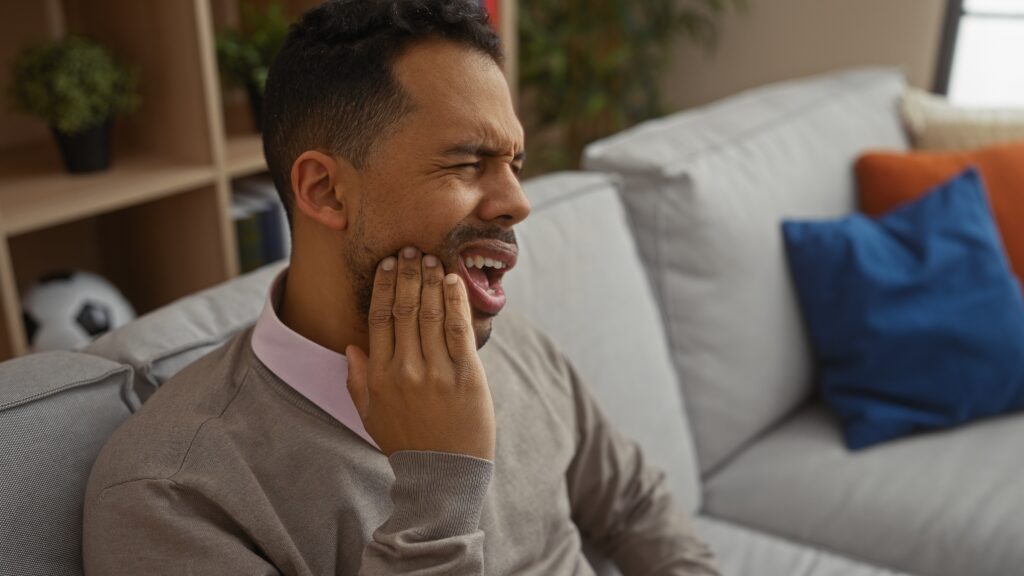
If your jaw is aching, clicking or tight, you probably want to know one thing: how long will this last? For many people, a TMJ flare-up eases within a few days to a few weeks, especially once the trigger is found and the jaw gets some rest. Pain that keeps coming back, lasts longer than two weeks, or comes with locking or a change in your bite deserves an exam. This guide explains what TMJ is, what sets off flare-ups, what you can try at home, and when it is time to see a dentist.
The short answer
- A single flare-up often settles in a few days to a couple of weeks.
- TMJ symptoms can come and go for months or years, often rising and falling with stress, grinding or chewing habits.
- Jaw pain that lasts longer than about three months is generally considered chronic and should be evaluated.
Many people improve with simple self-care and time. Others need help to break the cycle, especially when nighttime grinding keeps the muscles sore.
What TMJ and TMD mean
The temporomandibular joints (TMJ) are the two hinges just in front of your ears that connect your lower jaw to your skull. You use them every time you talk, chew or yawn. When people say they “have TMJ,” they usually mean a temporomandibular disorder (TMD): pain or problems in the joint, the chewing muscles, or both.
Common signs include:
- Jaw pain or soreness, especially in the morning or after chewing
- Clicking, popping or grating sounds when you open or close
- A jaw that catches, feels stuck or locks open or closed
- Headaches around the temples
- Pain or fullness near the ear without an ear infection
- Sore teeth or a bite that suddenly feels “off”
A jaw that clicks without pain or trouble opening is common and often needs no treatment.
What causes TMJ flare-ups
Most flare-ups come from overworked jaw muscles. Common triggers include:
- Clenching or grinding, often at night and often without knowing it
- Stress, which many people carry in their jaw
- Chewing gum, tough meats, bagels or hard candy
- Opening wide, during a big yawn, a long dental visit or a large sandwich
- Posture, such as long hours looking down at a phone or leaning toward a screen
- An injury to the jaw or face
- A change in your bite, such as a new filling or crown that sits slightly high
Writing down when symptoms start, even for a week, can help you and your dentist spot the pattern.
What you can try at home
For a mild flare-up, these steps help many people:
- Eat soft foods for a few days, such as soup, eggs, yogurt, pasta and cooked vegetables, and cut food into small pieces.
- Skip gum and very chewy or hard foods.
- Use a warm compress on tight muscles, or a cold pack wrapped in a cloth for 10 to 15 minutes if the area is sore or swollen.
- Support your chin when you yawn and avoid opening wide.
- Notice clenching during the day. A relaxed jaw has the lips together, the teeth slightly apart and the tongue resting on the roof of the mouth.
- Try gentle jaw stretches only if they do not make the pain worse.
Over-the-counter pain relievers help some people. Ask your physician or pharmacist which one is right for you and follow the label.
When to see a dentist
Book an exam if:
- The pain lasts longer than two weeks or keeps coming back
- Your jaw locks or catches, or you cannot open fully
- You often wake with headaches or sore jaw muscles
- Your teeth look worn, chipped or cracked, or your bite has changed
- Someone has heard you grinding your teeth at night
- Home care is not helping
Get emergency medical care, not a dental appointment, if jaw pain comes with chest pain, shortness of breath, sweating, or pain spreading to the arm or back. Jaw pain can be a sign of a heart problem. See a physician promptly if jaw pain follows an injury or comes with fever or facial swelling.
How a dentist treats TMJ
TMJ care is about easing symptoms and protecting your teeth, not a one-time cure. Most dentists start with the most conservative options.
- An exam. Dr. Katz checks the joints and chewing muscles, how your jaw opens and closes, and the wear on your teeth. X-rays or 3D imaging are used when needed.
- A night guard. A custom guard cushions the teeth and reduces strain on the muscles from nighttime grinding.
- Bite adjustment. If a high filling or uneven bite is part of the problem, small adjustments can help. Dr. Katz has trained in occlusion, the study of how teeth fit together, through Spear Education.
- Injections for muscle pain. For muscle-related pain that does not respond to other care, Dr. Katz is certified in Botox® through the American Academy of Facial Esthetics and also offers trigger point injections for TMD.
- Referral. Some joint problems are best treated by a physician, physical therapist or oral surgeon. If that is the right next step, we will tell you.
TMJ care at Bow Family Dentistry
Dr. Sarah K. Katz has more than 30 years in dentistry, with advanced training in occlusion, restorative care and therapeutic injections. Our office at 514 South Street in Bow is a short drive from Concord, Hooksett, Dunbarton and Manchester, about 15 to 30 minutes.
If your jaw has been sore, clicking or tight for more than a few weeks, call us at 603-224-3151 or request an appointment online. We will find out what is driving it and talk through options that fit you.
Frequently asked questions
Can TMJ go away on its own?
Often, yes. Many flare-ups settle within days or weeks with rest and self-care. If symptoms keep coming back, an exam can help find the trigger.
Can TMJ come and go?
Yes. Symptoms often flare during stressful periods or after a stretch of grinding, then quiet down. A pattern that keeps repeating is a good reason to be evaluated.
What happens if TMJ goes untreated?
Many cases stay mild. Ongoing grinding and clenching, though, can wear down enamel, crack teeth and fillings, cause gum recession and shift the bite, so recurring symptoms are worth an exam.
What kind of doctor treats TMJ?
Dentists commonly diagnose and manage TMJ, especially when grinding or the bite is involved. Some cases also involve a physician, physical therapist or oral surgeon.